Recent Publications
Experimental realization of PSO-based hybrid adaptive sliding mode control for force impedance control systems
This paper presents a practical solution for an adaptive impedance force controller with online learning capabilities, designed to mitigate the effects of inaccuracies in system identification models. The proposed hybrid algorithm addresses the challenges associated with online learning in real-world machines. Additionally, the system demonstrates the ability to adapt to environmental changes, maintaining high-quality performance despite variations. A sliding surface guarantees system stability, while Particle Swarm Optimization (PSO) optimizes impedance parameters, reducing the risk of local minima. The hybrid algorithm also reduces overshoot and undershoot, resulting in faster system responses. Simulation and experimental results demonstrate that the proposed technique outperforms conventional force control systems in terms of learning ability and overall performance.
Sarucha Yanyong and Somyot Kaitwanidvilai
Results in Control and Optimization, 2025
Localization for Outdoor Mobile Robot Using LiDAR and RTK-GNSS/INS
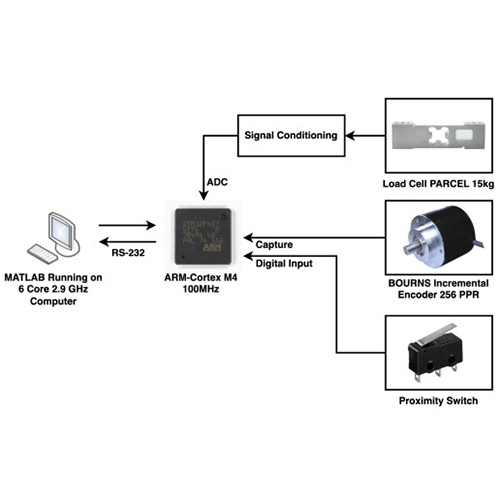
Two types of sensors, light detection and ranging (LiDAR) and real-time kinematic of global navigation satellite system with inertial navigation system (RTK-GNSS/INS), are used for the localization of outdoor mobile robots. However, using LiDAR and RTK-GNSS/INS independently was found to be insufficient for achieving precise positioning. Therefore, a sensor fusion approach based on an adaptive-network-based fuzzy inference system (ANFIS) was implemented to enhance reliability. In this research, data from both sensors were collected to create a dataset for training with ANFIS. The findings indicated that the model derived from the fusion of these two sensors provided results that were much closer to the actual values obtained using each sensor independently. The result demonstrated the effectiveness of the ANFIS-based fusion method in terms of improving the accuracy and reliability of the positioning system for outdoor mobile robots.
Thitipong Thepsit, Poom Konghuayrob, Anakkapon Saenthon, and Sarucha Yanyong
Sensors and Materials, 2024
DOI: 10.18494/SAM4841

Prediction of Flying Height Using Deep Neural Network Based on Particle Swarm Optimization in Hard Disk Drive Manufacturing Process
In contemporary hard disk drive (HDD) manufacturing processes, after the assembly of the HDD from the production line, a series of diverse calibration procedures are necessary to ensure standardization. These include capacity calibration, which determines the storage space in terabytes (TB) presently available, and flying height (FH) calibration, which evaluates the distance between the head and the disk by applying electric current to the heater coil element to achieve the desired FH, thus optimizing the writing and reading performance and tailoring it to each HDD. Additionally, electric current is saved in a digital-to-analog converter (DAC) unit for the utilization of a read/write head, while a preamp collaborates with the drive firmware to convert the electric current in the DAC unit to milliwatts. In the present scenario, multiple calibrations of flying heights (FHs), specifically flying height 1 (FH1) and flying height 2 (FH2), are performed. Each FH calibration requires a testing time of approximately 5 h owing to the separation of measurement points into 240 locations across the disk surface, referred to as test zones, with a total of 20 heads. The primary objective of this study is to reduce the testing time by using a combination of deep neural network (DNN) and particle swarm optimization techniques to predict the DAC profiles of FH2 as it approaches FH1, where FH1 is the input for the DNN model.
Worawit Kanjanapruthipong, Pitcha Prasitmeeboon, and Poom Konghuayrob
Sensors and Materials, 2024
DOI: 10.18494/SAM4825

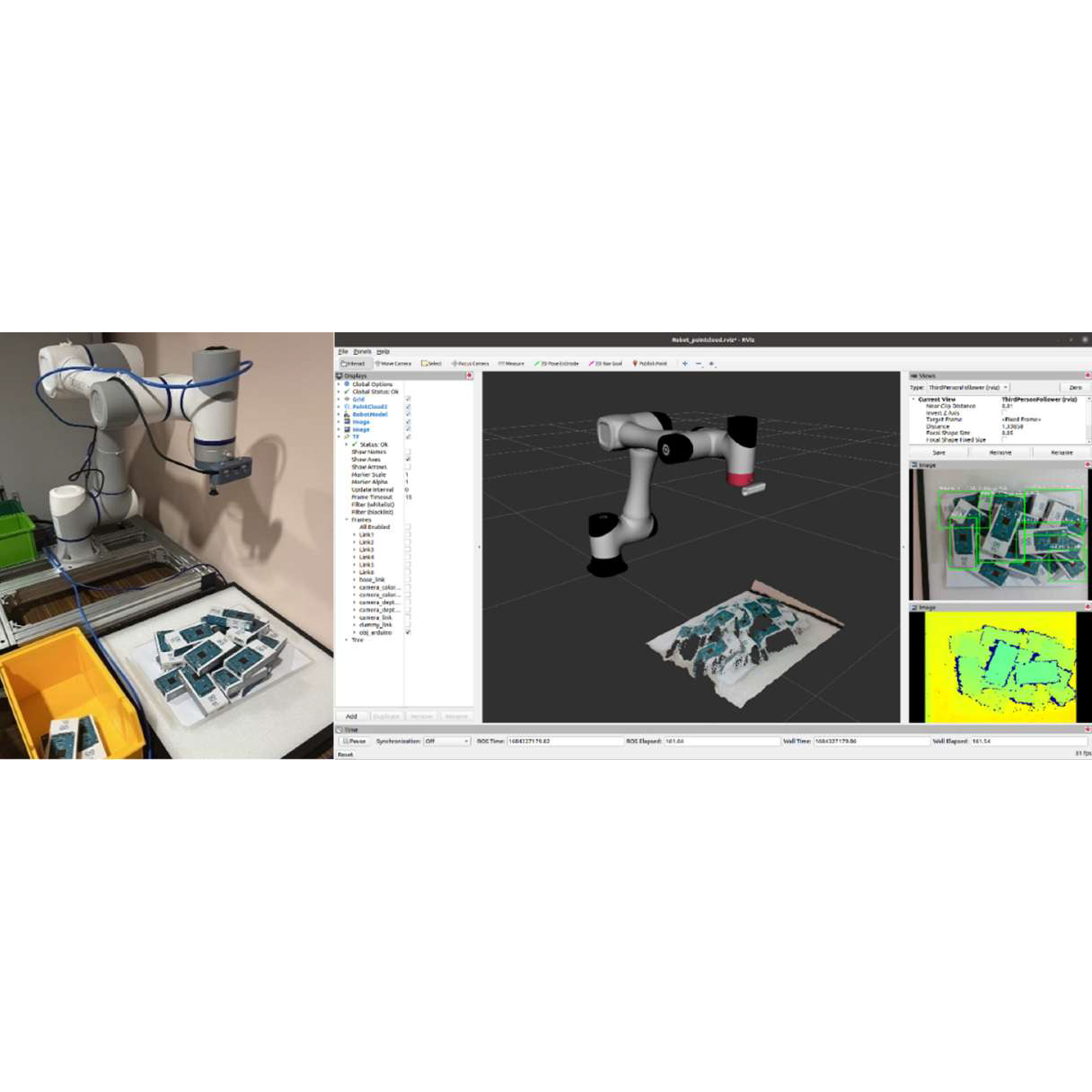
Hybrid Deep Lenrning and FAST-BRISK 3D Object Detection Technique for Bin-picking Application
In the field of industrial robotics, robotic arms have been significantly integrated, driven by their precise functionality and operational efficiency. We here propose a hybrid method for bin-picking tasks using a collaborative robot, or cobot combining the You Only Look Once version 5 (YOLOv5) convolutional neural network (CNN) model for object detection and pose estimation with traditional feature detection based on the features from accelerated segment test (FAST) technique, feature description using binary robust invariant scalable keypoints (BRISK) algorithms, and matching algorithms. By integrating these algorithms and utilizing a low-cost depth sensor camera for capturing depth and RGB images, the system enhances real-time object detection and pose estimation speed, facilitating accurate object manipulation by the robotic arm. Furthermore, the proposed method is implemented within the robot operating system (ROS) framework to provide a seamless platform for robotic control and integration. We compared our results with those of other methodologies, highlighting the superior object detection accuracy and processing speed of our hybrid approach. This integration of robotic arm, camera, and AI technology contributes to the development of industrial robotics, opening up new possibilities for automating challenging tasks and improving overall operational efficiency.
Thanakrit Taweesoontorn, Sarucha Yanyong, and Poom Konghuayrob
Sensors and Materials, 2024
DOI: 10.18494/SAM4840